Rwanda at Glance
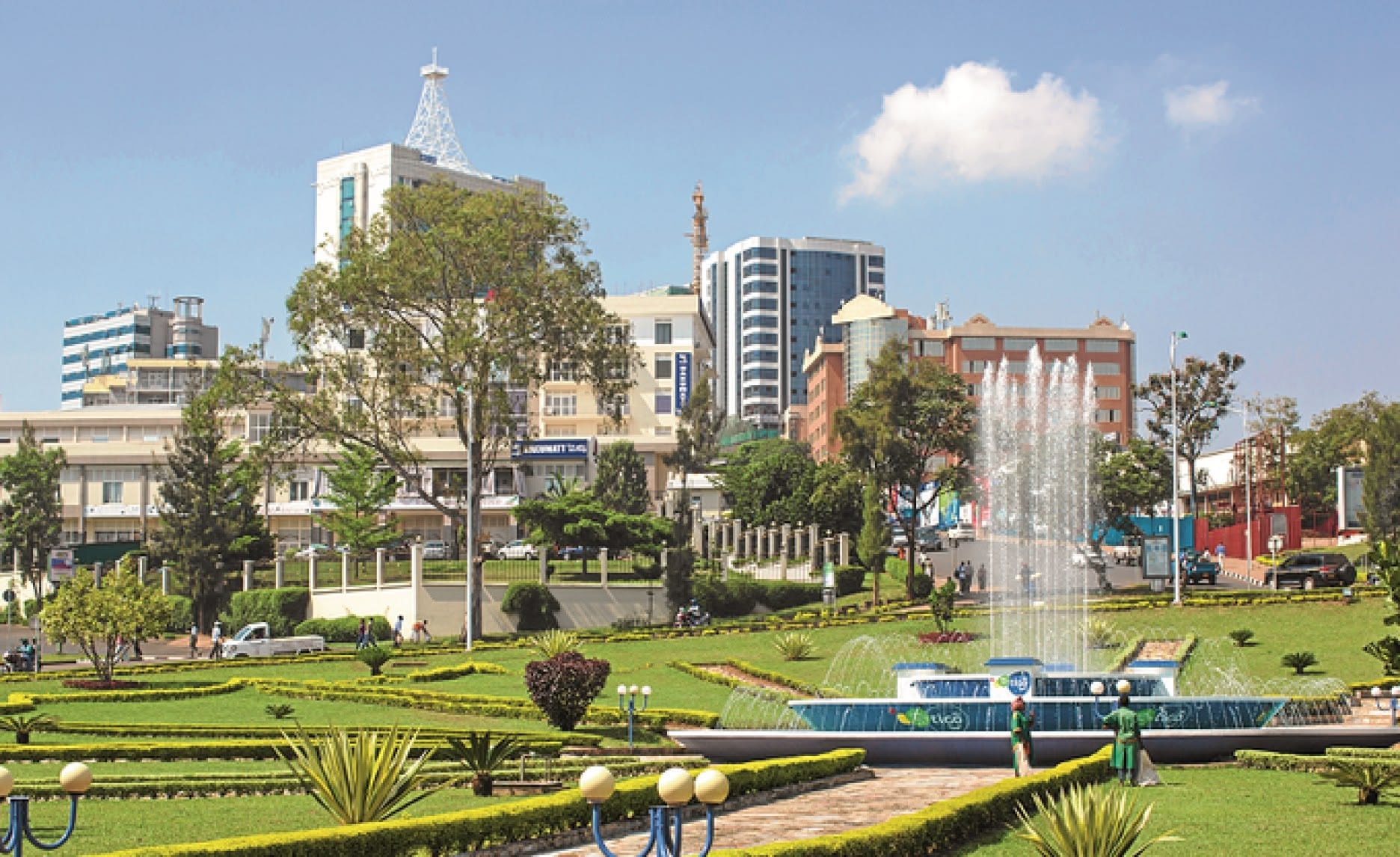
Rwanda, is a landlocked country in the Great Rift Valley of East Africa, where the African Great Lakes region and Southeast Africa converge. Located a few degrees south of the Equator, Rwanda is bordered by Uganda, Tanzania, Burundi, and the Democratic Republic of the Congo. It is highly elevated, giving it the sobriquet “land of a thousand hills” (French: pays des mille collines), with its geography dominated by mountains in the west and savanna to the southeast, with numerous lakes throughout the country. The climate is temperate to subtropical, with two rainy seasons and two dry seasons each year. It is the most densely populated mainland African country; among countries larger than 10,000 km2, it is the fifth-most densely populated country in the world. Its capital and largest city is Kigali.
Hunter-gatherers settled the territory in the Stone and Iron Ages, followed later by Bantu peoples. Within this group there are three subgroups: the Hutu, Tutsi and Twa. The Twa tribe are a forest-dwelling pygmy people and often considered descendants of Rwanda’s earliest inhabitants.
about Rwanda Safari
Wildlife in Rwanda
Rwanda has three main wildlife destinations,
- Akagera National Park,
- Nyungwe Forest National Park
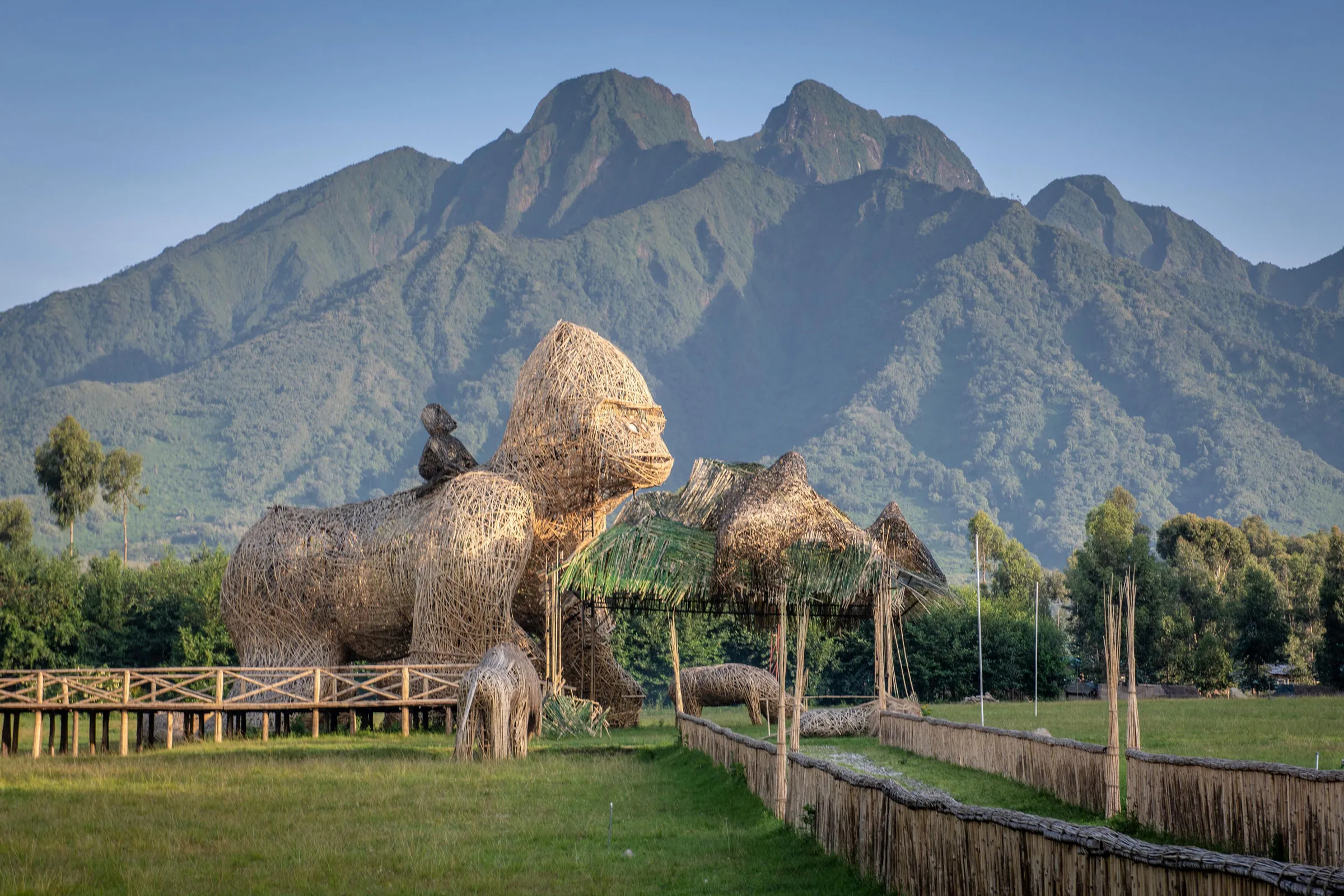
- Volcanoes National Park
Each of which host a quite different fauna to the others. Birdwatching aside, wildlife viewing opportunities outside these national parks are limited.

Akagera National Park

Nyungwe Forest National Park

Volcanoes National Park
When to Visit Rwanda
June - September
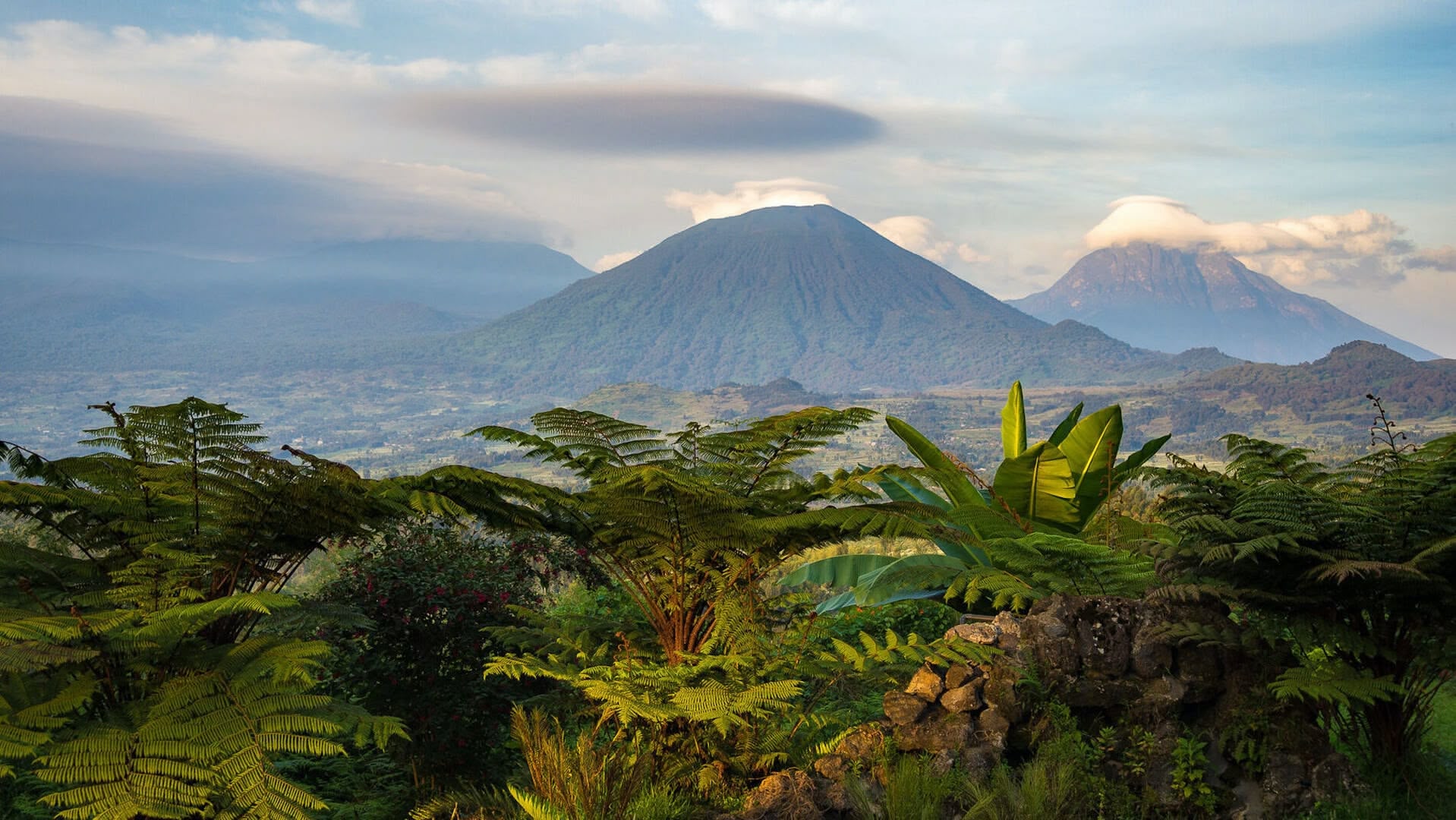
Lake and volcano in the Virunga Mountains
Rwanda has a temperate tropical highland climate, with lower temperatures than are typical for equatorial countries because of its high elevation. Kigali, in the centre of the country, has a typical daily temperature range between 15 and 28 °C (59 and 82 °F), with little variation through the year. There are some temperature variations across the country; the mountainous west and north are generally cooler than the lower-lying east. There are two rainy seasons in the year; the first runs from February to June and the second from September to December. These are separated by two dry seasons: the major one from June to September, during which there is often no rain at all, and a shorter and less severe one from December to February. Rainfall varies geographically, with the west and northwest of the country receiving more precipitation annually than the east and southeast
Giraffe
Gorilla
Birds
Lion
Population
- 14,414,910 People
The population coalesced first into clans, and then into kingdoms. In the 15th century, one kingdom, under King Gihanga, managed to incorporate several of its close neighbour territories establishing the Kingdom of Rwanda. The Kingdom of Rwanda dominated from the mid-eighteenth century, with the Tutsi kings conquering others militarily, centralising power, and enacting unifying policies. In 1897, Germany colonized Rwanda as part of German East Africa, followed by Belgium, which took control in 1916 during World War I. Both European nations ruled through the Rwandan king and perpetuated a pro-Tutsi policy. The Hutu population revolted in 1959. They massacred numerous Tutsi and ultimately established an independent, Hutu-dominated republic in 1962 led by President Grégoire Kayibanda.
Currency
- The Rwandan franc referred as (RWF) is the currency of Rwanda.
The franc became the currency of Rwanda in 1916, when Belgium occupied the previously German colony and the Belgian Congo franc replaced the German East African rupie. Rwanda used the currency of the Belgian Congo until 1960, when the Rwanda and Burundi franc was introduced. Rwanda began issuing its own francs in 1964, two years after gaining independence.
A proposal exists to introduce a common currency, a new East African shilling, for the five member states of the East African Community and this common currency has still yet to be introduced as it was scheduled to be launched in 2012/2013.
Language
- Languages of Rwanda
Kinyarwanda is the national language of Rwanda and the first language of almost the entire population of the country. It is one of the country’s official languages alongside with French, English and Swahili.
French had been the language of administration from the country’s time under Belgian administration, between the World War I and independence in 1962. Since the 1994 genocide, the complications of relations with successive French governments and the return of numerous Tutsi refugees from Anglophone Uganda meant an increase in the use of English by a higher proportion of the population and administration.
Rwanda a destinations regions
why book with us?
RESPONSIBLE TRAVEL
We have been making a difference for 30 years thanks to you, our guests!
FLEXIBILITY
We provide both flexibility and security with our flexible COVID-19 Terms & Conditions
IN OUR HANDS
You will have access to our unique Global Concierge service 24/7 while travelling
TRAVEL EXPERTS
Our Travel Specialists never send a guest anywhere they haven’t been themselves
FINEST GUIDES
Finest interpretive experience from our incredible private and specialist guides